Ola, Uber’s Big Rival In India, Raises $400M To Grow To 200 Cities This YearIt feels like Number26 opened its doors yesterday, but the young startup just raised a $10.6 million Series A round (€10 million) from Peter Thiel’s Valar Ventures, with Daniel S. Aegerter and existing investors Earlybird and Redalpine also participating. This represents Valar Ventures’ second investment in a European fintech startup — the VC fund also participated in TransferWise’s impressive $58 million round.
“We didn’t actually start fundraising — it was all inbound requests,” co-founder and CEO Valentin Stalf told me. “A lot of people contacted us, but these guys were actually the perfect match.”
As a reminder, Number26 participated in our Battlefield competition and told us that it wanted to create the best banking experience in Europe. Creating an account takes minutes and everything happens on your phone. After that, will receive a MasterCard that works particularly well with Number26’s app. For example, when you use your Number26’s MasterCard, you receive a push notification to make sure that the transaction was approved and there is no fraudulent use. You can also disable features or set limits so that you don’t have any surprise. For example, you can disable online payments if you don’t plan on using this card for your favorite ecommerce websites.
And even more important, opening and maintaining an account is free and lets you pay anywhere in the world without any foreign transaction fee. Instead, the startup makes money from MasterCard’s tiny cut on every transaction. While Number26 only accepts German and Austrian customers for now, 8,500 people signed up already and 15,000 others are waiting for an invite.
I opened a Number26 account to test it out, and was really impressed by the overall experience. Opening an account takes minutes, push notifications are incredibly useful and being able to pay in other currencies without any fee is a killer feature.
Until now, the company didn’t do any marketing to attract all these customers. Number26 wants to spend a part of this round on marketing and build a solid brand to compete with banking heavyweights. For instance, Number26 could boost its growth by giving a bit of cash for user referrals.
Today’s round is also essential when it comes to growing the team, and in particular Number26’s customer support team. The startup is slowing down its growth with invites on purpose so that it can provide a solid customer support experience. The team of 30 employees should double in the next 12 months.
Existing customers can also expect a few new features. “We are going to work a lot on bringing more intelligence into the account,” Stalf said. “Currently, if you look at the timeline of your transactions, it’s completely static. Going forward, we want to inform you more actively when important transactions come in.”
Other new features include a better fraud management system by comparing the geolocation of your smartphone and the geolocation of the transaction in real time. The MasterCard will also be compatible with Maestro ATMs in the coming months. Budgeting features should get an upgrade as well as the company is working on a more precise automatic clustering system.
When asked about European expansion plans, Stalf told me that his company is really focused on Germany and Austria for now. But Number26 should come to other countries eventually. “With this round, we will open up one or two other countries in Europe,” he said. “But we are actually not sure what country, and it’s probably not happening in the next 6 months.”
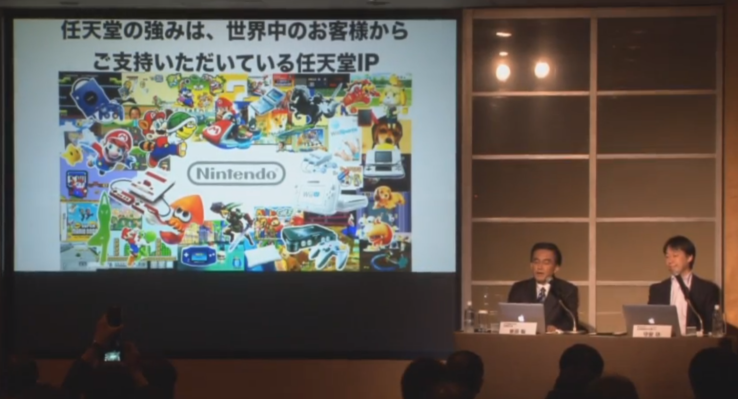 Nintendo is finally bringing its games and characters to mobile after the company surprised the tech world with an alliance with Japanese mobile gaming firm DeNA.
