Showing posts with label Galaxy. Show all posts

Tuesday, 31 March 2015

The Samsung Galaxy S6 Edge Is The New Hotness

Why Jay-Z’s Music App Tidal Sounds DoomedThe Samsung Galaxy S6 Edge Is The New HotnessThe smartphone to beat this season is the Galaxy S6 Edge. It’s slim, stylish, and powerful, a mashup between the previous Galaxy S series with the original iPod Touch. It’s well-made and unique, a combination rarely found in cellphones these days and it is as far from the Galaxy S5 as the T-1000 was from the original Terminator. In short, it’s pretty cool and probably the only S6 – the other being the non-curved standard model – I’d buy.
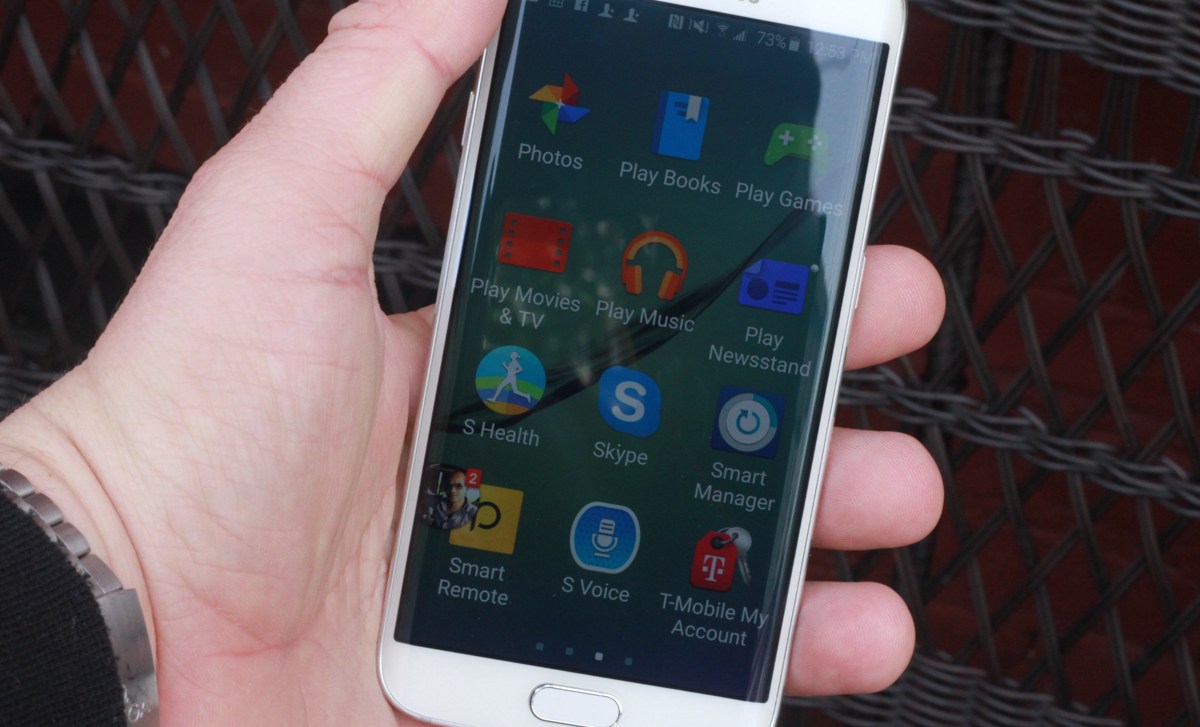
The Edge Case
This review is primarily about the S6 Edge. Out of the two phones released by Samsung at MWC the Edge most deserves to be called a flagship – a device that shows the best of what the company has to offer. While the “standard” S6 is solid, usable, and handsome, I think the Edge is the real winner here. Why? First off the design is unique and unique to Samsung. It is the one that you will notice and it feels great in the hand. The standard S6 is another solid slab and although the size difference is minuscule you can truly feel the difference. The Edge disappears in the pocket while the S6 is just another smartphone.
Everything in the S6 is available in the Edge. Both run a Exynos 14nm 64-bit Octa Core processor and both come in 64 and 128GB variants (you can get the S6 in 32GB.) Both have a built-in IR blaster for changing channels on your television, a usable heart rate monitor that doubles as a flash, acceptable front and back cameras, and a beautiful 5.1-inch 2560 x 1440 pixel Super AMOLED display that Samsung uses to excellent effect. Everything about the phone is smooth – from the pixel-free screen to the lush colors to the animations and transitions. This is Samsung kicking out the stops.
FacebookLinkedInSamsung Galaxy S6 And S6 Edge Hands OnThe Good
Those familiar with modern Android won’t be surprised by everything the S6 has to offer. It’s more of the same but better. NFC payments are on the table, where available, as is fingerprint recognition. The processor and 3G of RAM make things snappy and Samsung’s Milk services are built in to supply music and video. SHealth, Samsung’s health offering, can measure your steps and take your pulse. They pre-bundled Hancom Office on board in case you wanted to check out some spreadsheets on your flight.
The S6 Edge is just good. It has great battery life – it’s run for about 1 day on a charge with heavy use and lasted about two days on standby. This time will degrade with use, however, so expect about 18 hours of firm usage, less if you’re watching video or browsing a lot. Samsung has truly streamlined Android notifications and made them pleasing to swipe through and read. The lock screen is eminently useful thanks to a little list of icons under the notifications that show you what you have in your queue. A button on the right side wakes the phone up from sleep and there are volume buttons on the left side. That’s it. The rest of the phone is nearly featureless except for a little slot for the SIM card and the iPhone-like bottom face.

Sunday, 1 March 2015

Hands On With The Samsung Galaxy S6 And S6 Edge

Samsung has two brand new smartphones, the Galaxy S6 and Galaxy S6 edge. It’s a first for the company, in terms of revealing two different versions of its primary flagship on stage at the same time, and we got a chance to try both of them out to see how they perform.
 The resulting experience was impressive in both cases, and while the biggest changes were on the design front, Samsung’s software shifts also came out as very promising overall.Hands On VideoFacebookLinkedInSamsung Galaxy S6 And S6 Edge Hands OnDesign
Galaxy S6

The Galaxy S6 and S6 edge both eschew the usual plastic Samsung has favored for flagships in the past for glass and metal, but the S6 has a more traditional flat front face, as well as a design that can’t help but be compared to iPhone devices, resembling something of a cross between the iPhone 5/5S and the iPhone 6 or 6 Plus. It has a 5.1-inch display with glass both front and back, and with a metal edge running all the way along the outer edge of the phone.
While the Galaxy S6 certainly has iPhone-style cues, it would be overly reductive to say it’s at all a clone or copy. Both the S6 and the S6 edge feature a new special treatment that pairs a reflective coating of metallic paint applied in an ultra-thin layer to the underside of the protective glass surface. The machined metal edge, which is part of a solid frame that extends throughout the body of the S6, actually extends at every point slightly above the glass, which Samsung says is designed to help make sure any impact from a drop is absorbed by the part of the phone which is shatter-resistant, instead of the glass surfaces.
galaxy-s6-volume-buttons galaxy-s6-camera galaxy-s6-charger galaxy-s6-colors galaxy-s6-gold-blue galaxy-s6-black galaxy-s6-blue galaxy-s6-vs-galaxy-s5 galaxy-s6-side galaxy-s6-bottom galaxy-s6-back galaxy-s6-s6-edge-tops galaxy-s6-camera-module galaxy-s6-color-cases galaxy-s6-clear-cases galaxy-s6-folio-cases galaxy-s6-edge-cases  View Slideshow Previous Next Exit
The S6’s design is already a huge departure from Samsung’s frankly boring past industrial design, injecting some fresh life in a brand that definitely needs to inspire new passion. In the hand, it feels much more premium than the Galaxy S5, and though some die-hard fans of accessible batteries might feel saddened that the S6’s is locked away (and that the SD card slot is also gone), the trade-offs in terms of Samsung finally having made a flagship that doesn’t feel somewhat like a child’s toy are well worth it.
Galaxy S6 Edge

If the Galaxy S6 marks Samsung’s graduation in terms of smartphone industrial design, the S6 edge is a post-doc. While the Note Edge seemed more like an experiment, reserved for users who might be seeking something especially untested and novel, the S6 edge’s sloped sides feel instead like a mostly aesthetic design decision. The two curved edges still house the same single display that occupies almost the entire S6 edge’s front face, rather than covering a discrete screen like on the Note Edge, and it ends up resulting in fewer acrobatics to try to add extraneous features that users don’t need on the software side.
galaxy-s6-edge-green s6-case s6-edge-case s6-edge-camera galaxy-s6-edge-corner galaxy-s6-edge-colors galaxy-s6-edge-black galaxy-s6-edge-gold galaxy-s6-edge-green-front galaxy-s6-edge-green-2 galaxy-s6-edge-front galaxy-s6-edge-vs-galaxy-s5 galaxy-s6-edge-back galaxy-s6-edge-top galaxy-s6-edge-side galaxy-s6-edge-bottom galaxy-s6-edge galaxy-s6-folio-cases galaxy-s6-cases galaxy-s6-camera-module galaxy-s6-s6-edge-tops  View Slideshow Previous Next Exit
The S6 edge doubles down on the premium feel of the S6, somehow convincing the brain that it’s a sleeker and slimmer machine than the more traditional Samsung flagship even though it actually isn’t that different in this regard. And combined with the new color effects, and taper of the metal frame where it encounters the curved glass, this is a device that both looks very good and feels nice to hold.
Hardware and Software Features
The new Galaxy S6 offers a number of features that improve the overall experience vs. past devices, but the two most practical might be the use of a single touch fingerprint reader in the home button, which works like Apple’s Touch ID instead of with swipe-based reading like the the GS5, and a double-tap home button shortcut to instantly trigger the camera wherever you happen to be in the OS on your phone.

A redesigned, much lighter user interface with a lot more in common with stock Android 5.0 Lollipop, combined with the new camera shortcut and the actually useful fingerprint sensor (the previous one worked, but was a pain to operate, especially one-handed) all combine to make this one of Samsung’s best-ever efforts out of the box, based on the time we got to spend with the device.
In very limited testing, both the new front and back cameras proved able to take good pictures in lighting that was fairly challenging in terms of mixed brightness and weird color balance. I did manage to take some blurry photos by basically doing my best to foil it, but based on very early experience it seems like it could be a strong contender in terms of Android smartphone camera excellence.
Bottom Line
Samsung’s Galaxy S6 is some ways a less whiz-bang update than others, at least in terms of flashy software features and questionable hardware additions made just with the seeming intent of pushing the envelope. Instead, what they’ve presented is a device that feels in almost every way like a more mature product than anything they’ve shipped previously, with a few smart new features that either 100% improve broken ones from earlier generations, or that genuinely add convenience features people will actually use.
One of Samsung’s best-ever efforts out of the box.
Despite Samsung’s tremendous global success in terms of device sales and market share, it has never offered my personal favorite Android hardware. The S6 and S6 edge actually stand a good chance of earning that distinction this time around, thanks in large part to a design that finally screams ‘premium’ when touched or held.

Meet The New Samsung Galaxy S6 And S6 Edge, Arriving April 10

Samsung has indeed revealed its new flagship smartphone today, but there are actually two: The Galaxy S6, and the Galaxy S6 edge. The company’s latest premier smartphones are mostly similar on the inside, but with different external body designs, both of which push the envelope in terms of what Samsung has done with its Galaxy lineup in the past.
The Galaxy S6 and S6 edge combine metal and glass, eschewing almost entirely the standard plastic setup that Samsung has show a preference before in previous smartphone designs. A metal frame runs throughout, sandwiched between two panes of durable Gorilla Glass 4, which has also been treated on the inside with a special reflective material coating, giving them a jeweled-metal look that explains why some early leaks made it seem like Samsung had opted for metallic rear casing surfaces.
While both are marked departures for Samsung, the Galaxy S6 edge may be its most ambitious design to date, with a screen that curves away on either side of the front of the device, and a subtler, matching curve on the back surface, too. The effect is both visually stunning and pleasant to hold, as you can read in our first hands on impressions of both devices.
Of course, the S6 lineup also boasts improved specs, including a slimmer and lighter design, compared to the S5 and older Galaxy hardware. Here’s a breakdown of the primary improvements:
5.1-inch 2560×1440 Super AMOLED display with 577 ppiExynos Octacore processor, 3GB LPDDR4 RAM32/64/128GB UFS 2.0 internal storageAndroid 5.0F/1.9 16MP rear camera with optical image stabilization and live HDRF/1.9 5MP front camera with live HDRCategory 6 LTE with 300 Mbps down/50 Mbps up max theoretical speedsWi-Fi 802.11 AC with HT80 MIMO, Bluetooth LE, NFC, IR blaster2,550mAh (GS6) and 2,600mAh (GS6 edge) batteries
Specs never tell the full story, and Samsung has done plenty more to try to make this a significant flagship reboot inside and out. The f/1.9 aperture on those front and back cameras should translate to improved low-light function on each, and the auto HDR and image stabilization options also help contribute to the goal of making it much easier for device owners to snap great pics. Samsung has also added a feature whereby double pressing the home button launches the camera instantly, in what it claims is just 0.7 seconds, no matter where you happen to be or from device lock. A subject lock borrowed from the NX-1 dedicated Samsung camera lets you continually autofocus on a specific subject, too.

As rumored, the phone also has embedded wireless charging tech, which includes support for both WPC and PMA standards, meaning you can use it with Starbucks, as well as with the more prevalent Qi-enabled home chargers. Samsung is also going to sell its own charging pucks, of course, and on the power front they’ve also upped wired charging by a factor of 1.5x, meaning you should get around 4 hours-worth of battery out of 10 minutes of plugged-in charging.
There’s no swappable memory card support, but the new UFS 2.0 tech Samsung used for its internal flash memory is much faster than any external card or previous internal storage, the company says, and it now offers that 128GB option for those who need ore space, as well as cloud services for remote storage.
Samsung has also redone the fingerprint scanner in the home button so that you no longer have to swipe, and they’re going to use that with the launch of their Samsung Pay tech coming later this year. Finally, they’ve lightened up their approach to skinning Android (UI add-ons removed by 40 percent, in fact, according to Samsung), and don’t even mention the word ‘TouchWiz’ anywhere, which is great news.
The Galaxy S6 and S6 edge go on sale starting April 10  in markets around the world, with White Pearl, Black Sapphire, and Gold Platinum color options for both, plus a special Blue Topaz for the Galaxy S6, and Green Emerald reserved for the Galaxy S6 edge. In the U.S., they’ll be available at AT&T, Sprint, T-Mobile, U.S. Cellular and Verizon, as well as Samsung’s micro-stores within Best Buy locations, Amazon.com, Costco, Sam’s Club, Target and Walmart.

Samsung To Offer An Oculus-Powered Gear VR For Galaxy S6 And S6 Edge

Mozilla’s CTO On Cars, Facebook And Why It Doesn’t Matter You Can’t Use Uber On Firefox OSSamsung continues investing in the future of mobile virtual reality, with a brand new version of Gear VR designed specifically to work with the new Galaxy S6 and S6 edge smartphones. The Gear VR still carries the ‘Innovator Edition’ tag that means it’s aimed primarily at bleeding edge tech enthusiasts and developers than the general public, and it continues to use Oculus technology to power the software and VR mechanics, but it’s designed to work specifically with the Galaxy S6’s new ultra-high resolution 577 ppi 5.1-inch Quad HD display.
The denser display means users will get reduced pixelation on this iteration of Gear VR, Samsung says, and longer usage time thanks to battery improvements. It’s also much smaller than the Gear VR set designed for the Note 4, with an overall 15 percent reduction (196mm x 107.9 mm x 82.9 mm to be exact) for the newest headset. Samsung’s new 14nm Exynos Octacore also offers better computing capabilities for powering VR experiences, and it now supports power in via its USB port ofor longer use sessions.
Prior to this launch, we speculated about whether Samsung would do something to make the existing Gear VR compatible with its new flagship, or whether they’d do something dedicated, and it looks like we have our answer. It’s still not a genuine, general use consumer VR headset, but it’s another step along that path, and one that should power a lot more interesting feedback, given the larger likely user pool of Galaxy S6 buyers, vs. Note 4 purchasers.

The Story Behind Samsung’s Galaxy S6 And S6 Edge Design Departure

The Story Behind Samsung’s Galaxy S6 And S6 Edge Design DepartureThe Story Behind Samsung’s Galaxy S6 And S6 Edge Design DepartureAdvertisement
Samsung has done something very different with this year’s flagship – or different for Samsung, at least. The company that has long held on to the belief that it can produce top-tier hardware using platics as the core component of device industrial design has switched to an all metal and glass enclosure.
 And for those who wondered what a Samsung smartphone using premium materials might feel like, the Galaxy S6 edge in particular is a very promising result. But how did Samsung, of all companies, ever launch a device where design was the primary tentpole feature?Zero
To get to the Galaxy S6 and S6 edge, Samsung says it had to start from zero – meaning tossing out the design book that led to dimpled plastic mock-leather backs and shiny plastic hamburger outer ridges. It mean taking a step back and opening up the design process to feedback, listening to the complaints of both professionals and consumers regarding Samsung’s previous design choices, and then building anew from there.
To get to the Galaxy S6 and S6 edge, Samsung says it had to start from zero.
Some might argue that Samsung didn’t start from nothing when it decided to move away from its plastic design legacy. Apple, after all, has created devices that look quite similar to the Galaxy S6, and details like the arrangement of ports and holes on the bottom edge of that hardware do look quite similar to the current setup at the base of an iPhone 6. But despite familiar port layouts, antenna placement and materials choices, the new Galaxy phones still feel distinctly Samsung, perhaps in part because they’ve retained familiar features like the rounded rectangle home button and center-set camera lens.
galaxy-s6-meta-frame
And the unique qualities of the curved display not the S6 edge are also Samsung through-and-through, with a reeling-in of a far-out feature the company introduced last year which in some ways helps illustrate down their entire product development process. The Note Edge has a curved edge with a dedicated display, which appears continuous with the rest. Reviewers mostly found that cute but ultimately extraneous, however, and the S6 edge is an iteration in action based on that response: it’s mostly aesthetic, rather than functional, and it contributes what it needs to without ending up feeling flippant.
Samsung says the design for these devices has been in the works for the past several years, rather than over the course of a few months or just since the Galaxy S5 was introduced. Its design came about in parallel with the choices made on the S5, Note and Note Edge line, though you also get the sense from the company that there were clear camps that favored one track vs. the other, and that the kind of metal-and-glass approach used on the S6 didn’t gain ascendancy without struggle.
It’s possible that Samsung’s recent struggles in its dominance of the global smartphone market helped give credence to voices within the company that sought to change their reputation for making handsets that seemed more functional than fashionable. It’s also likely due to the changing nature of Samsung’s business: The company was knocked off its lofty perch atop the key greater China smartphone market, first by Xiaomi undercutting its wide product range on price, then by Apple outdoing it in the premium sector with iPhone 6 and 6 Plus.
galaxy-s6-edge-corner
Whatever the reason, Samsung has decided to break with tradition and take a risk on a design more in line with what premium customers expect. It’s not a guarantee that they’ll be able to retake lost ground in that segment, but it’s clear the opposite strategy wasn’t working in terms of long-term growth.
Practicality And Personality
Even though they changed their material strategy, with the added pressure to continue to offer ever-thinner and sleeker devices, Samsung didn’t want to also make their devices colder and less approachable. That’s why they developed, in-house, the sub-surface reflective coating that gives the GS6 and S6 edge its metallic- or jewel-like finish, which has the added benefit of being protected from scratching or marring itself thanks to being underneath the Gorilla Glass 4 outer surface.
The color options, including the bold and bright exclusive options for each model, were Samsung’s attempt to acknowledge that increasing desire on the part of consumers for a device that reflects their own personality. In smart watches, the trend towards greater customization is clear, but Samsung’s design choices are meant to appeal to that same instinct, in a way that still maintains the same general device feel and handheld user experience across variations.
galaxy-s6-bottom
On the practical side, Samsung’s designers made some changes that reflect usability challenges with previous designs. The rear-facing speaker is replaced with a downward facing one, which Samsung says makes for 1.5 times louder sound. There’s also a customizable LED with color options based on who’s contacting you, and quick reply settings that you can assign to the rear IR sensor next to the camera, so that you can automatically respond with just a finger press without ever lifting the phone off the table. Designers also made sure to extend the metallic frame above the glass surface all the way around the edge, in an effort to make it less likely to shatter in case of a fall. This was a passion project that emphasized user experience in minute detail.
Can Design Save?
The big question about making design the central selling point of the Galaxy S6 is whether or not it can turn things around for Samsung’s smartphone division, and help it resume growth and reclaim its position of absolute global device dominance. There’s no question, in my mind, that what Samsung has done vastly improves upon its existing track record of hardware look and feel, but ultimately the market will have the final say.
This was a passion project that emphasized user experience in minute detail.
That may dictate whether or not Samsung takes more of these kinds of design risks in the future, instead of the kind of conservative approach that has been the hallmark of Samsung’s Galaxy flagships over the course of the past few years.

Sunday, 22 February 2015

Latest Teaser Suggests Samsung’s Galaxy S6 Will Sport A Metal Back

Got a tip? Let us know.MenuSearchNewsChannelsStartupsMobileGadgetsEnterpriseSocialEuropeAsiaTrendingTinderNSAAndroidGoogleMicrosoftAppleTwitterFacebookAll TopicsAll GalleriesTCTVShowsTCTV NewsBuilt in BrooklynCrunchWeekFly Or DieGadgetsIncubatedInside JobsTC CribsAll ShowsAll VideosEventsTechSupport EventsDisruptStartup BattlefieldCrunchiesMeetupsInternational City EventsHackathonIncludeNews AboutGoogle I/O 2014CESSXSWWWDC 2014

Wednesday, 11 February 2015

Samsung Teases Galaxy S6 Camera As Reports Of Two All-Metal Models Emerge

Samsung’s next flagship device is going to be revealed in just a few short weeks ahead of this year’s Mobile World Congress, and the head of the company’s camera division is already teasing us about its photo capabilities. In an official blog post, Samsung SVP DongHoon Jang provided a survey of the company’s smartphone camera progress over the years, complete with a chart breaking things down in terms of megapixel count on both front and back cameras from the Galaxy S, to last year’s Galaxy S5.

Jang talked a lot about some of the specific advances made to smartphone cameras in recent years, including technical tricks like High Dynamic Range (HDR) and phase detection auto focus. Thanks to these and other features, the Galaxy S5 has earned a reputation as among the best rear cameras currently available on a smartphone, according to Jang.

In a section hinting at what’s to come, Jang highlighted the recent work Samsung has done to improve the front-facing camera on their devices, including the 5 megapixel shooter on Galaxy A7, A5 and A3 devices. That’s likely an indication that the upcoming flagship Galaxy S6 (or whatever Samsung chooses to call it) will have at least a 5 megapixel sensor up front, if not something even more-improved to serve our growing vanity.

Jang also notes that each new generation of camera goes through over 10,000 photo-captures of testing, in all types of lighting, and this is linked to how they’re thinking about the next generation of mobile cameras for their devices. He says the cameras on this year’s flagship will be


© 2013 Tech Support. All rights resevered. Designed by Templateism

Back To Top