Showing posts with label Service. Show all posts

Thursday, 16 April 2015

On-Demand Food Delivery Service Sprig Has Raised $45 Million

Wikipedia’s New iOS App Sees An Improved Design, Adds Social Features With Shareable “Fact Cards”Sprig, a food delivery service that specializes in healthy on-demand meals in San Francisco, has raised $45 million in a funding round led by Social+Capital and Greylock Partners.
The company plans to expand to the remainder of the Bay Area and Chicago in the coming months, and then more cities by the end of 2015. Sprig’s menu is limited, but is supposed to arrive no later than 20 minutes after someone places an order, and usually costs around $10. Sprig prepares all the food in its own kitchen run by several high-profile chefs.
Many on-demand services, such as Sprig, have seen intense interest in recent months from the venture capital community. Shyp is raising $50 million at a valuation greater than $250 million. Postmates is expected to raise a large funding round. And Instacart, an app that lets users order groceries and delivers them, raised $210 million in December.
For the most part, on-demand delivery is still a new industry where many startups are experimenting with business models. So it would make sense for venture capitalists to make multiple bets until the most successful model emerges. Even Uber is experimenting with on-demand food delivery.
“It wasn’t possible to do what Sprig was doing 5 to 10 years ago,” Sprig CEO Gagan Biyani said. “If you look at companies like Dominoes, what they were doing was a logistical nightmare. Today we can orchestrate that much more beautifully with the technology and data science we use to route drivers more efficiently.”
But the company is not the only one focusing on food delivering that’s attracting interest. SpoonRocket last year also raised $10 million, and DoorDash reportedly raised $35 million earlier this year.
To its credit, Sprig began expanding its delivery service to the southern San Francisco Bay Area earlier this year.
“[Expanding to new cities is] how a lot of on-demand services show successful growth,” Biyani said.
“With Sprig, we’ve shown we can grow to a large amount even within one market. If you look at the most successful companies, they’re growing within their existing markets and adding. New customers are still finding sprig today in San Francisco.”
For now, Biyani says the company’s biggest focus will be finding and adding new team members in San Francisco and Chicago. Sprig raised $10 million in financing in a round led by Greylock Partners last year. The company launched in November of 2013.

Rocket Internet Acquires Restaurant Delivery Service Volo

Number26 Grabs $10.6 Million To Bring Its Bank Of The Future To EveryoneWell, what do we have here. Just a couple of days after participating in European restaurant delivery service Take Eat Easy’s €6 million Series A funding round, ‘startup factory’ and e-commerce behemoth Rocket Internet has acquired Germany’s Volo, a startup playing in exactly the same space. If I was Take Eat Easy’s CEO I might be slightly puzzled to say the least.
Similar to Take Eat Easy, and a number of other direct competitors, such as Deliveroo in the U.K., and DoorDash in the U.S., Volo lets you order food online from restaurants that don’t traditionally offer a take-out and delivery service.
This differentiates it from Rocket Internet’s own Foodpanda, Delivery Hero, and Just-Eat, which operate a pure marketplace model that relies on the restaurants themselves to handle delivery.
A graduate of Telefónica’s startup accelerator Wayra (and first exit for the telco’s Munich-based academy), Volo originally launched in October 2014 in Munich, but has recently expanded to Berlin, and Frankfurt, with the German cities of Hamburg, Cologne, and Duesseldorf up next. It’s also talking up aggressive international plans — 9 counties, apparently — including Italy, Spain and Sweden.
The fact that Volo operates in Germany, with Spain seemingly imminent, appears to put it on a path to directly compete with Rocket Internet investment Take Eat Easy, which says its immediate expansion plans include the two countries. Plans can change of course, so we will have to wait and see. Rocket Internet declined to comment.
Terms of Rocket Internet’s acquisition of Volo also remain undisclosed, so it’s hard to tell if this is a home run for the young startup, or its backers, including Telefónica.
“Together with the founders of Volo, we have devised an exit strategy and are very proud to have implemented this so successfully,” says Garan Goodman, Managing Director of Wayra Deutschland, in a statement. “The team at Volo have made some fantastic achievements. We are more than impressed by the potential for success presented by the teams currently at the Academy”.
Meanwhile, whatever the subtleties (or not) of Rocket Internet’s strategy, it’s clear that it continues to see food delivery, or moving convenience food online in all its various guises, as a massive growth opportunity. The e-commerce giant has been aggressively building out its Global Online Takeaway Group, a roll up of all its food delivery companies, which include online take-out ordering service Foodpanda, and a significant stake in rival Delivery Hero.

Tuesday, 7 April 2015

Nintendo As A Service

Amberjack Reels In $500K To Let You Book A Fishing TripAdvertisement
With the rise of iOS and Android, hundreds of millions of people have come to see mobile gaming as an activity done on their phones rather than a dedicated device.
Portable consoles like the Nintendo 3DS and PlayStation Vita offer plenty of fun experiences built from the ground up for their hardware and controls, but in the grand scheme of things, what was once the norm for the space is now the niche, just as point-and-shoot cameras were subsumed by the rise of the smartphone.
In the home, Nintendo’s now in a very far third place behind the PlayStation 4 and Xbox One, just one generation after outselling Sony and Microsoft by 20 million units with the original Wii. If it weren’t for Nintendo’s high attach rate (it can get a lot of Nintendo fans to pick up every single new release for $59), the console would look like an absolute disaster.
Where Things Went Wrong
Nintendo’s home console has basically lost all support from third-party publishers, and it’s Nintendo’s own fault. The Wii U, which dropped a year ahead of the PlayStation 4 and Xbox One, was more of a PlayStation 3.5 in terms of CPU and GPU horsepower. For its first year or two, we saw a number of ports from previous-gen consoles, which brought familiar graphics and some gimmicky use of the Wii U’s touch screen for things like maps for aiming distant shots in games like Batman: Arkham City — Armored Edition.
Now that developers are starting to focus on Sony and Microsoft’s newer consoles, the Wii U is being left behind. Unlike the PlayStation 4 and Xbox One, which transitioned to an x86 architecture that essentially uses PC parts, Nintendo’s console still relies on a custom PowerPC architecture that’s backwards compatible with the original Wii. It’s a non-trivial task to port games to a less-powerful console — you have to peel away things like shaders and high-resolution textures and detailed character models until performance is acceptable, and in some cases you can’t do so without breaking the visual design of your game.
In a market where tentpole games with huge marketing budgets need to sell millions of units to make a profit, developers have opted not to invest the time and money in making Wii U-compatible versions of their games only to have a total addressable market of ~10 million consoles. It started with games from the likes of EA Sports, but now you’re unlikely to find more than a handful of third-party Wii U games lining the shelves of GameStop or even Nintendo’s eShop.
People don’t get a Wii U to play the mega-blockbusters like Call of Duty and Grand Theft Auto with their friends, they get them for Super Smash Brothers and Mario Kart and The Legend of Zelda (you’re killing me with that delay, Nintendo). The typical usage cycle for the Wii U looks something like this:  buy the console with your very favorite exclusive game. Play the heck out of it, then pick up the next Nintendo-made favorite. Once you’ve gone through the titles that match your interests, it’s a waiting game for the next big exclusive, and in the meantime there are all the new titles coming out for PCs and other consoles.Play VideoHands On With The New Moto EMore Related VideosSuper Smash Bros. is one of the series keeping core gamers interested in Nintendo’s consoles.
“You buy Nintendo consoles for Nintendo games” has been a mantra to the devout Mario enthusiasts for a long time, and it’s more accurate today than in previous generations of their hardware. Yet the company has yet to embrace this fact in a way that could mellow this generation’s dip in popularity. If Nintendo is currently sustained by a small subset of very dedicated users buying every major release, by golly it should be doing everything it can to keep those customers engaged and happy.
Finding The Right Path
Some recent events around Nintendo’s Virtual Console and digital storefront provide a lens with which to examine the company’s current strategy and execution.
Last week, Nintendo announced that it was bringing games from the Nintendo 64 and Nintendo DS consoles to the Wii U’s Virtual Console. The first wave of titles included just two games: Super Mario 64 and Yoshi’s Island DS. This limited release seems rather odd, given the fact that the emulation community has been playing games from both consoles (with legally-tenuous backups of game files) on less powerful devices for years.
As I noted in my write-up of the news, the Wii U was long expected to get games from the DS. The touch screen and stylus, while not the selling point Nintendo probably hoped for when it designed the console, makes it feasible to essentially provide the exact same control scheme as the DS. When the Wii U launched in 2012, I hoped that we’d get a wave of DS games over the course of 2013 and 2014, as happened with the original Wii’s Virtual Console library from late 2006 through 2008.
Instead, Nintendo seems to have gotten more conservative with its Virtual Console strategy over time, not more aggressive. On top of limited launches, there are also fewer games available for emulation through official means now than there were on the original Wii, which received 20 more titles from the Nintendo 64 than the Wii U. There are also odd limitations with regard to which consoles get to play which older games: for some reason, Nintendo has opted to make Super Nintendo and Game Boy Advance games unavailable for the 3DS despite its more-than-capable hardware. And if you buy a game for the Nintendo Entertainment System for your Wii U and then decide you want to play it on the go, you have to repurchase it from the 3DS eShop — games are tied to your console, not your Nintendo Network ID.
You’ll have to buy that classic twice if you want it on your 3DS and Wii U.
There are some strategic reasons Nintendo could give to justify its current release tactics. For instance, remakes of the two Nintendo 64 Legend of Zelda games have become 3DS killer apps, and maybe the company thinks it would lose out on sales if those gamers could have spent $10 on an older version that works on their Wii U. That users have to purchase games twice to have them at home and on-the-go probably looks pretty nice from an accounting perspective. But I have a hunch they’re missing out on sales from the Nintendo die-hards who would buy the company’s classics just to have them in their library, conveniently and legally, forever.
That’s the angle Sony has taken the PlayStation Vita and its home consoles: if you buy a PSone classic on the Vita, you can also download it on your PlayStation 3 or 4 for no extra charge. And once you’ve started making progress in the game, you can transfer your save files between systems and pick up gameplay on whichever device is more convenient.
CrunchBaseNintendoFounded1889  OverviewNintendo is a Japanese multinational consumer electronics company developing game consoles.It is engaged in developing, manufacturing and distributing best-selling desktop and portable consoles and related hardware and software components. It also offers entertainment products such as Family Computer/NES, Super Famicom/SNES, Nintendo 64, Nintendo GameCube, Wii and Wii U.Nintendo was founded on …LocationKyoto, KyotoCategoriesConsumer Electronics, Video Games, GamesWebsitehttp://nintendo.comFull profile for NintendoAndroidDescriptionAndroid is a software platform for mobile devices based on the Linux operating system and developed by Google and the Open Handset Alliance. It allows developers to write managed code in Java that utilizes Google-developed software libraries, but does not support programs developed in native code.The unveiling of the Android platform on 5 November 2007 was announced with the founding of the Open …Websitehttp://code.google.com/androidFull profile for AndroidGamestopFounded2004  OverviewGamestop is an American video game retailer with over 6,000 locations worldwide. The company spun off from Barnes & Noble in 2004 and operates as GameStop and EB Games.LocationGrapevine, TexasCategoriesRetail, GamesWebsitehttp://gamestop.comFull profile for GamestopPlayStationDescriptionThe Sony PS3 is the 3rd generation console available with Blu-Ray.Websitehttp://www.us.playstation.comFull profile for PlayStationMicrosoftFounded1974  OverviewMicrosoft is an American multinational corporation that develops, manufactures, licenses, supports and sells computer software, consumer electronics and personal computers and services. Its best known software products are the Microsoft Windows line of operating systems, Microsoft Office office suite, and Internet Explorer web browser. Its flagship hardware products are Xbox game console and the Microsoft …LocationRedmond, WashingtonCategoriesVideo Games, SoftwareFoundersBill GatesWebsitehttp://www.microsoft.comFull profile for MicrosoftSony CorpFounded1946  OverviewSony Corp is a multinational conglomerate corporation that designs and develops electronic equipment, instruments, and devices for consumer, professional, and industrial markets. The company’s product portfolio includes LCD televisions, audio systems, Blu-ray disc players, memory-based audio devices, personal computers, interchangeable single-lens cameras, mobile phones, tablets, accessories, applications, …LocationTokyo, TokyoCategoriesConsumer Electronics, Hardware + SoftwareWebsitehttp://www.sony.net/Full profile for Sony Corp
Ideally, Nintendo would follow that tactic, letting you pick up the original Metroid or Golden Sun on either the 3DS or Wii U, save your state, and then keep playing on your other console with all progress seamlessly transitioning between the two. And we wouldn’t be limited to a handful of cherry-picked releases from a few consoles: Nintendo should aim to have as much of its first-party library available on both platforms as possible: NES through N64, with any consoles from Sega’s past serving as icing on the cake. I’m not the first to suggest this — just over a year ago.

Going Forward
The Wii U is still a sales flop and we’re a few years out from the next Nintendo console, which is rumored to either share hardware and software architectures between portable and at-home consoles or simply exist as a single unit that can fulfill both roles. As the company prepares for that eventual launch, it has plenty of time to push its Virtual Console and account strategy towards the ideal, so that by the time there’s a unified philosophy Nintendo fans will either already have content to enjoy on their new devices or be used to the idea of buying a game for both.
OlliOlli, one of the first games you can buy for both the 3DS and Wii U with one purchase.
There are a few signs that Nintendo is finally zeroing in on that mindset. There’s the mobile gaming deal with DeNA, which includes bringing characters like Mario and Link to smartphone games as well as a new online service that should finally keep all of your Nintendo account info in one place. Early last month, Nintendo also announced a “radical” new deal: if you buy indie skateboarding game OlliOlli for either the Wii U or 3DS, you automatically get a copy of the game on the other console for free. It’s not quite the same as PlayStation’s nearly ubiquitous “cross-buy” label for PSone and indie games, but it’s a step in the right direction.
To be clear, there are reasons for rolling out such a strategy than simply satisfying super fans, as Nintendo itself has shown. In late 2013/early 2014, Nintendo and The Pokemon Company rolled out the Pokémon Bank, an app for the 3DS that lets you keep Pokémon in the cloud for a $5 annual fee. In the past, transferring your digital creatures between games (to “catch em all”) required multiple consoles and cartridges — compared to the old system, the new method feels convenient enough to be worth the fee despite actually only managing mere kilobytes of data in the cloud. Then there’s the popular Amiibo figurines, which Nintendo made to serve as collectibles you regularly buy as add-ons for games on the Wii U and New 3DS. Nintendo could similarly offer a Virtual Memory card that transfers saves between consoles without manually syncing for an annual fee, or even a Netflix-like subscription that gives access to the company’s entire back catalog (minus most third-party games).
All of this is to say that Nintendo’s current line-up could get a real boost from a philosophy that aims to provide more content and services that conveniently work across devices in exchange for more money from the biggest fans. Sure, smartphones and tablets have eaten into the casual and family-friendly markets, but there are millions of people who still see the company as the Pixar of video games, with each new release a must-buy. By transforming the Wii U and 3DS into the best machines you can buy for classic gaming nostalgia, Nintendo could better serve its best fans (in exchange for more regular income) and create a solid base of content for its next console.
The key is for Nintendo to stop lagging behind its competition and go all-in on cross-platform, cloud-enabled approach. That would be a big shift for the company, which is known for taking years to re-adust its course and lagging behind the competition in terms of using technology to build out interesting new services. But there’s only so long before Nintendo can’t rely on the adoration of life-long fans anymore — instead of occasionally tapping its fans’ reserves of goodwill with random releases of classics, the company needs to go all-in on the concept: deliver a unified Virtual Console with a more complete library that lets you pick up your favorite classics whenever you want and never lose progress you’ve made on other consoles.

Saturday, 4 April 2015

Dropbox Is Testing An Online Note-Taking Service With “Project Composer”

Bill Maris To Talk Longevity At Disrupt NYIt appears that Dropbox is bringing back HackPad, the collaborative documents service the company acquired a year ago. The Y Combinator-backed startup had grown to become a popular tool for taking quick notes at conferences, events, as well as in the classroom, due to its simple design, ease of use, and real-time nature. Now, a service called Composer, which looks remarkably like HackPad, has appeared.
The project was first spotted by a user on Product Hunt, the site that features daily round-ups of the best products based on votes from its online community. Today, SeatGeek product guy Adam Waxman posted a link to Composer on the site, but others were quick to reply that they were unable to access the service for themselves.
The app is hosted on the Dropbox.com domain, and the name refers to an internal project underway at Dropbox, it seems. The project first requests authentication with your Dropbox account, so it can access your files and folders.

Though most could get through the initial steps of authenticating with Composer, you’re then shown an error message that reads: “Sorry, you’re not allowed to use Notes right now.”
Alongside the message, it instructs you to email feedback@dropbox.com if you believe the message was in error.

However, one Product Hunt user, Maggie Bignell of Pocket, who also previously used HackPad prior to its acquisition, was able to log in to Composer.
She says the site offers a clean note-taking experience, much like Evernote on the web, and allows for collaborative note-taking. Composer users can add tasks, Dropbox files, and tables all in line with their notes, Bignell explains, having now tried the product herself.
@rrhoover It’s definitely interesting (+ typography 😍). Integrates hackpad notes I have, prompts for mtgs. pic.twitter.com/o727GWaztJ
— Maggie Bignell (@maggled) April 3, 2015
Overall, it’s a lot like what HackPad had offered in the past, with the obvious addition of Dropbox integration. While the app currently doesn’t have as many bells and whistles as something like Evernote (which frankly has been heading towards overkill with new, “smart” features like “Context,” for example), Composer could definitely play a valuable role for those who already use Dropbox as their preferred cloud storage service. It would make the most sense for those who want a way to more easily add files to Dropbox, without having to first take notes in a word processor then upload that file to the cloud.
The addition also plays into Dropbox’s larger plans to move into the online collaboration space, something that other acquisitions, including that of a workplace chat solution called Zulip, also address.
Dropbox declined to comment on the record about Project Composer, but says it will have more information on the product soon.

Tuesday, 31 March 2015

Service Marketplace StarOfService Takes On Thumbtack

New York Times Will Deliver One-Sentence News Stories To Apple WatchFrench startup StarOfService plans to provide a solid Thumbtack alternative for the rest of the world. To achieve this goal, StarOfService is opening its marketplace in 80 countries and just raised $1.2 million (€1.1 million) from Point Nine Capital, Kima Ventures, Oleg Tscheltzoff and other business angels.
When I talked with co-founder and CEO Lucas Lambertini, he doesn’t even hide that StarOfService is a Thumbtack copycat. If you look at the two homepages, the layout is exactly the same. StarOfService’s only innovation is that it is targeting new markets — and it’s working for now.
“We aren’t going to wait for our American competitor to bring its great innovation to the rest of the world,” Lambertini wrote in an email.
Here’s how StarOfService and Thumbtack work. These marketplaces help you find handymen, photographers, yoga teachers, interior designers and more. Yet, unlike with TaskRabbit and other directories, customers don’t have to waste time searching for different options for a job. Instead, they tell the platform exactly what they are looking for, and service providers have 24 hours to bid on the job. The client then receives multiple quotes, compares reviews and picks the right person. It is much faster for the client and supposedly more efficient as well.
As with every marketplace, there is a potential bottleneck if professionals aren’t actively interested in bidding for jobs on StarOfService. The company told me that it now handles 60,000 jobs per month and works with 190,000 professionals. It has mostly been focused on its home market for now, but is opening in Germany, the U.K., Italy, Spain, Russia, Brazil, Mexico and more.
But StarOfService is still a tiny competitor for Thumbtack. In August of last year, the American company raised $100 million in a round led by Google Capital. In February, Thumbtack told TechCrunch’s Colleen Taylor that it was facilitating $2 billion annually in services through its platform.
Thumbtack is only available in the U.S. for now. In other words, I hope that Thumbtack doesn’t expand to Europe any time soon, as the company has enough funding to crush the local competition. But StarOfService could also represent an interesting acquisition target for Thumbtack to drive its international expansion plans.

Tidal Confirms Partnership With Sprint Owner Softbank For Its Artist Co-Owned Music Service

This Easy Cheese 3D Printer Offers Sweet, Golden DisruptionWe are still light on details, but now we know a bit more about Tidal, the high-defintion music streaming service that relaunched today, including a long list of musician-shareholders in the service and the participation of Softbank.
Jay Z may be the name we’ve heard in connection with Tidal’s new ownership, but today, the company unveiled a lineup of 17 other famous musicians that are also a part of the venture as co-owners: Alicia Keys, Calvin Harris, Win Butler and Régine Chassagne from Arcade fire, Chris Martin from Coldplay, Beyonce, Guy-Manuel de Homem-Christo and Thomas Bangalter from Daft Punk, Jack White, J. Cole, Jason Aldean, Kanye West, Deadmaus, Madonna, Nicki Minaj, Rihanna and Usher.
And they may not be the only ones. In her opening remarks during a launch event in New York, Vania Schlogel — an executive at Aspiro, the parent company of Tidal — confirmed that the music service will be partnering with Sprint and Sprint’s owner, Softbank. But, in keeping with the light-detail theme, she did not provide any details explaining how. Separately, the NY Post reports that Softbank may be partly bankrolling the service.
We are trying to get more details about Softbank’s and Sprint’s involvement.
As we pointed out earlier today, Tidal is moving into the market against other very strong gravitational forces. It will compete with Spotify, which has 15 million paying users, and 60 million overall; Beats, with all the might of Apple behind it; and many more. Tidal today has less than 40,000 paying subscribers. The company currently has no freemium tier — only two options for users, a $9.99/month “premium” standard definition service and a high-def service at $19.99/month.
Will a roster of big-name artists and a lot of big ideas be enough? Right now it’s too early to tell. The feeling that the brief event tried to convey today most of all was artists trying to take back the show from the technologies and others in the industry that have upstaged them. Alicia Keys, who did all of the talking on behalf of the artists, sketched out the vision like this:
“Our mission goes beyond commerce and technology,” she said. “Music is the world’s first true universal language. There’s not a soul living who can deny its impact.”
Confirming our earlier report, she also noted there will be an emphasis on making the experience one-of-a-kind. She described Tidal as “a place for connection between artists and fans where we will deliver exclusive experiences. Tidal is cultivating a sound business enterprise that promotes sustainability in our world.”
Later, a video of the musician co-owners brainstorming in a “town-hall” style event pointed to a bit more of the tension and frustration that some musicians feel at the state of play today. (A shortened version is here.)
“They see us as a product,” the shorter of the helmeted Daft Punk duo said in his French-accented clip, referring to the current music streaming services in the market.
“This is about bringing the artist back into this. This is not about technology,” Madonna said flatly.
“We’re like the Avengers!” someone else noted in the voiceover.
“They are writing the story for us we need to write the story for ourselves,” said Jay Z. “If these artists can sit in a room together, the game changes forever.”
This is the “declaration” that the artists signed on stage today:
Throughout history, every movement began with a few individuals banding together with a shared vision – a vision to change the status quo.

That vision came to life with a first step. Our first step begins today through the platform TIDAL.
TIDAL is an artist majority owned company with a mission to reestablish the value of music and protect the sustainability of the music industry rooted in creativity and expression.
As part of our vision to introduce change to the current system, we will continue expanding this platform into an all-encompassing destination in the coming months. We are working diligently everyday to enhance the overall service.
Today, the site incorporates high quality sound, video and exclusive editorial, but there are more features on the way. In time, TIDAL will not just be a streaming service but an immersive platform with enhanced experiences.
With TIDAL we are making a commitment to build a platform that reflects ideas contributed directly from artists, providing an enriched experience. Music presented and heard the way the artists intended.
We want our mission with TIDAL to spark conversation and lay a foundation for tomorrow’sburgeoning stars.
Our movement is being led by a few who are inviting all to band together for a common cause, a movement to change the status quo.

Tuesday, 17 March 2015

Apple Web Television Service Would Awaken A Sleeping Apple TV Giant

More Rain For Cloud Business Intelligence As Birst Raises $65MApple is set to launch a dedicated streaming TV service beginning in September, according to the Wall Street Journal. The offering would boast around 25 channels, including major broadcasters like ABC, CBS and Fox and would likely be priced around $30 or $40 a month, with an initial unveil in June (most likely at WWDC).
This follows an announcement from Apple at last week’s event that it would be the exclusive first digital TV partner for HBO Now, which is the cable network’s dedicated streaming service that is coming in April to Apple TV and iOS devices for $15 per month. The new service would offer more of a package similar to what Sling TV, the over-the-top offering from Dish, provides in its $20 micro bundle for streamers.
Apple is also talking to companies like Walt Disney and Fox, but the WSJ says it won’t include content from NBCUniversal because of a spat between Apple and NBC parent Comcast Corp. So long as the company can muster a good crop of the kind of popular specialty channels that typically trigger expensive bundle sales in traditional cable and satellite packages, though, that omission probably won’t be all that troubling to potential buyers – especially given that NBC is still available free OTA in most markets.
If Apple does indeed launch this service as planned, it’s hard to understate the potential value it can drive across its lineup of hardware offerings. The service would work with iPhone and iPad, as well as with Apple TV, but the Apple TV is where it could move the needle most.
Given this report, it seems very likely that Apple’s announcements at its Spring Forward event last week were intended to set up a scenario in which the Apple TV hardware becomes a gateway device for users new to its product line, as well as something that will greatly increase its appeal to existing owners and established Apple fans alike.
The price cut to $69 combined with the HBO Now access is already probably a powerful enough incentive to spike sales, but an online TV offering that greatly undercuts your typical bundle and offers more premium content at the same time has the potential to really explode Apple TV sales. Rumors about such an offering on Apple’s set-top box have existed since it was first introduced, and all the work Apple has done to make it a compelling independent offering arguably still pales in comparison to what it can accomplish by just throwing in some more traditional live channels.
Apple TV is currently viewed as a supplement, not a replacement, to existing TV service for most users, and that might be its greatest limiting factor. If the company does really launch a streaming TV service this fall, expect TV hardware to be viewed in a new light, by both Apple and consumers alike.

Friday, 6 March 2015

WhatsApp Says It’s Not “Permanently” Banning Users From Its Service, Just Blocking Third-Party Clients

MWC And The Future Of VRQuite a few reports circling the web this week appear to indicate a tightening of WhatsApp’s policy toward the usage of third-party WhatsApp client applications. That is, word has it that those using an unofficial app will be banned from WhatsApp for life. However, that’s not exactly the case, WhatsApp explains. In fact, there’s been no larger policy shift since we last reported on the now Facebook-owned company’s crackdown on third-party app usage earlier this year.
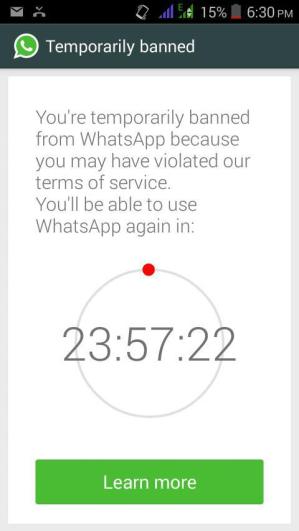
As you may recall, in January, WhatsApp began banning users from its service when they were found to be using a third-party (unofficial) WhatsApp mobile application. In order to be allowed back into WhatsApp, users were asked to uninstall the offending app from their phone, then download the authorized version of WhatsApp from the app store instead. The company also explained the policy via an FAQ on its website.
At the time, one popular app maker even reported receiving a cease-and-desist from WhatsApp related to his service’s development.
The reason for the crackdown, the company explained, was related to security and privacy. It simply can’t guarantee such apps are safe, given that WhatsApp doesn’t control their source code.
That challenge is one many mobile application makers today face, as failing to restrict third-party app usage can lead to disastrous results – as Snapchat found out last year when its users were hacked. The event, dubbed “The Snappening,” came about due to insecurities in third-party applications.
The confusion this week related to WhatsApp’s policy on third-party clients appears to stem from a Google+ posting from WhatsApp+’s developer where he states that WhatsApp has started a “Permanent Account Disable” recently. That post was picked up by a German blog, and then subsequently began making the rounds as other sites repeated the story, and the details (in some cases) became fuzzy.
whatsappplusbanThe problem is that there’s confusion around this terminology of a “lifetime ban.” That makes it sound like users are being banned from WhatsApp forever, but that’s not the case.
Instead, the same policy as before still stands: if users continue to use WhatsApp+ (or another third-party app), they will not be able to use WhatsApp anymore, as the company explained previously.
What has perhaps shifted is that, before, the company was issuing 24-hour “temporary” bans complete with a countdown timer displayed to affected users, but now those users are simply not able to use WhatsApp’s services at all until the third-party apps are uninstalled.
“If a user doesn’t uninstall WhatsApp+ then they will continue to be banned until they stop using it. But there is no permanent ban,” a WhatsApp spokesperson confirms.
In other words, once a user removes WhatsApp+, WhatsApp Reborn, OgWhatsapp or any other third-party client from their smartphone, they’ll again be able to use the official WhatsApp app – just the same as before. Their account and associated phone number is not “permanently” banned or “banned for life” from WhatsApp itself.

Thursday, 26 February 2015

Nickelodeon Unveils “Noggin,” A Mobile Subscription Service For Preschoolers Arriving In March

Nickelodeon Unveils “Noggin,” A Mobile Subscription Service For Preschoolers Arriving In March | Kiko Labs Debuts A Series Of “Brain-Training” Games For KidsKiko Labs Debuts A Series Of “Brain-Training” Games For KidsBrowse more...nickelodeonNickelodeon To Debut A Subscription-Based Video Streaming Service This SpringNickelodeon To Debut A Subscription-Based Video Streaming Service This SpringThe Wii remote, used for the spraying of paintThe Wii remote, used for the spraying of paintThe Internet during a recession: Welcome distraction or ruiner of dreams?The Internet during a recession: Welcome distraction or ruiner of dreams?Browse more...Nickelodeon Unveils “Noggin,” A Mobile Subscription Service For Preschoolers Arriving In March
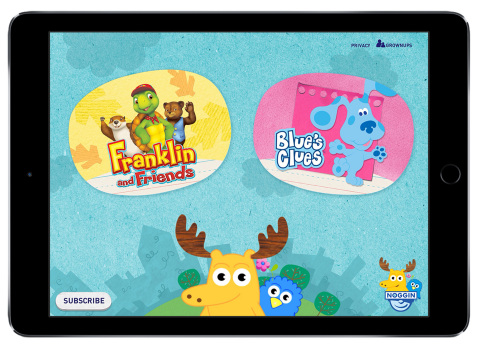
Nickelodeon today unveiled its new mobile streaming subscription service called Noggin, which will be aimed at preschoolers and priced at $5.99 per month when it launches next month. Parent company Viacom had previously announced the forthcoming service’s arrival in January, noting also that it would not require households to have a cable or satellite TV subscription in order to access its content.
Nickelodeon says that’s it’s also in discussions with distributors about making Noggin available to authenticated pay TV subscribers as a “premium complement.”
The service will first arrive as a mobile application for iPhone, iPad and iPod touch beginning on March 5, the company says.
Details of the service were introduced at Nickelodeon’s annual upfront presentation today, where the company confirmed some of the initial content Noggin will include. Several of its current kids’ shows such as Blue’s Clues, Little Bear and Ni Hao, Kai-lan will be available at launch, as will animations featuring Nick’s preschool characters Moose and Zee who pop up in between TV shows on Nick’s TV channel, offering short-form educational games that help kids learn letters, shapes, matching and more.
The company says that the streaming service will offer other long and short-form content, too, including titles like Allegra’s Window, Blue’s Room, Franklin and Friends, Gullah Gullah Island, Miss Spider’s Sunny Patch Friends, Oswald, Pocoyo, Robot and Monster and The Upside Down Show.
If some of those shows don’t ring a bell – even though you’re a parent of a preschooler – it’s because they’re not among some of Nick Jr’s more popular programs, like Dora, Bubble Guppies, Umizoomi, Wallykazam!, or PAW Patrol. None of those top shows seem to be included in this new over-the-top subscription option.
Instead, it sounds like Nick wants to have the best of both worlds – it wants to keep current distributors happy while also tapping into the potential for additional revenue streams by targeting cord cutters with a paid mobile service. In fact, the company states that Noggin’s library will remain “separate and distinct” from Nickelodeon’s preschool content on its “existing distribution platforms.”
Or, in other words, the good stuff is elsewhere. Hopefully kids aren’t too picky about their favorite characters.
Meanwhile, the current Nick Jr. mobile app will remain intact following Noggin’s launch. This app is a “TV Everywhere” platform that offers both a live feed of current Nick Jr. TV shows and on-demand episodes available to pay TV subscribers. It’s also where you’ll find the network’s most watched and most loved preschooler shows.

Chat App Viber Opens Its Games Service To All Users Worldwide

Messaging app Viber has quietly made its games service available for all users worldwide following a two month pilot in five countries.
The company, which was bought by Rakuten for $900 million a year ago, initially launched three games for users in Belarus, Malaysia, Israel, Singapore and Ukraine in December 2014. The titles — Viber Candy Mania, Wild Luck Casino and Viber Pop, links to which popped up in my app today — are standalone apps that link up to Viber to let users share scores, battle and generally interact with friends on the service.
The theory is that they can increase some users’ engagement with the service, and — most importantly for Viber — make money via in-app purchases for power-ups, additional lives, etc.
Viber CEO Talmon Marcos told TechCrunch that he is excited to bring the titles to more of Viber’s international userbase, which currently stands at 236 million active monthly users. Marcos declined to provide specific details about the pilot, but he did say that initial engagement data was “encouraging”.
Marcos added that Viber users can expect to see new games arrive soon, but for now the company isn’t giving away precise details of its plans.

Viber will be hoping that games can become a significant revenue stream in the same way that they have for other messaging app companies. In-app purchases from games account for more than half of Line’s revenue, while Tencent has seen its mobile revenues surge thanks to WeChat’s games catalog. Games have also helped Kakao Talk, which is dominant in Korea but has a weak global footprint, turn in profit since 2013.
Gaming harbors much promise for messaging app services, but there is some caution to be noted. Naver, Line’s parent company, missed its most recent earnings expectations after several key games on the Line platform underperformed. Line has since spread its focus and doubled down on its online-to-offline services with a new investment fund, and a series of initiatives including a Tokyo taxi service, a grocery delivery pilot and a TV service.
Viber currently draws revenue from games, sticker sales and its Skype-like international calling plans. Last year, it introduced a social network-like platform for public figures which could potentially make money further down the line.
One more certain expectation is that it will introduce commerce services, powered by Rakuten’s business, sometime this year. Viber’s userbase has grown steadily — it added 17 million monthly active users over the last quarter — but the service continues to run at a deficit.

Tuesday, 24 February 2015

First Look At Beatport’s Free Dance Music Streaming Service

Got a tip? Let us know.MenuSearchNewsChannelsStartupsMobileGadgetsEnterpriseSocialEuropeAsiaTrendingTinderNSAAndroidGoogleMicrosoftAppleTwitterFacebookAll TopicsAll GalleriesTCTVShowsTCTV NewsBuilt in BrooklynCrunchWeekFly Or DieGadgetsIncubatedInside JobsTC CribsAll ShowsAll VideosEventsTechSupport EventsDisruptStartup BattlefieldCrunchiesMeetupsInternational City EventsHackathonIncludeNews AboutGoogle I/O 2014CESSXSWWWDC 2014

Saturday, 21 February 2015

RapidMiner Picks Up $15M More To Scale Its ‘Business Source’ Data Analytics Service

Got a tip? Let us know.MenuSearchNewsChannelsStartupsMobileGadgetsEnterpriseSocialEuropeAsiaTrendingTinderNSAAndroidGoogleMicrosoftAppleTwitterFacebookAll TopicsAll GalleriesTCTVShowsTCTV NewsBuilt in BrooklynCrunchWeekFly Or DieGadgetsIncubatedInside JobsTC CribsAll ShowsAll VideosEventsTechCrunch EventsDisruptStartup BattlefieldCrunchiesMeetupsInternational City EventsHackathonIncludeNews AboutGoogle I/O 2014CESSXSWWWDC 2014All EventsSearch TechCrunchSearch TechCrunchSearchCrunchBaseFollow UsFacebookTwitterGoogle

Tuesday, 17 February 2015

Australian Service Directory Oneflare Acquires Review Site WOMO

Oneflare, a local services directory based in Sydney, Australia, announced today that it has acquired WOMO, which claims to be the country’s largest customer reviews site. The amount of the deal was undisclosed.
Marcus Lim, the founder of Oneflare, said the acquisition will allow his company to grow more quickly because WOMO (which stands for

Monday, 16 February 2015

Just Eat Acquires Mexican Online Take-Out Ordering Service SinDelantal.Mx

They say lightning doesn’t strike twice, but in the case of Just Eat’s latest acquisition, that is exactly what has just happened: The online take-out ordering behemoth (and recently publicly listed company) has acquired Mexico’s SinDelantal.Mx to add to its Latin American presence and keep up the pressure on Rocket Internet’s Foodpanda.
SinDelantal.Mx’s founders, Diego Ballesteros and Evaristo Babé, also founded and sold Spain’s SinDelantal to Just Eat back in late 2012, for a price we pegged in the range of

Thursday, 12 February 2015

Restaurant Discovery Site Zomato To Launch Food Delivery Service, Starting In India

Zomato, the restaurant discovery site that acquired U.S. rival Urbanspoon last month, is expanding its business into food orders, starting in its home market of India next month.
The company plans to launch a new service letting customers across India order food directly from its platform on March 16 with an initial 2,000 restaurant partners. Zomato CEO and co-founder Deepinder Goyal told TechCrunch that he expects to reach 10,000 supported restaurants nationwide within a few months of the service’s debut.

Tuesday, 10 February 2015

Line Buys Stripe-Like Japanese Startup WebPay To Boost Its Payments Service

Messaging app company Line is beefing up its payments service after it scooped up Japanese startup WebPay in an undisclosed acquisition deal.
Line Pay began rolling out to its 500 million registered users in December. Initially the service, which is integrated into Line’s core chat app, is limited to buying digital goods from Line’s platform

Deezer Takes Elite, Its High-Definition Music Service, Global With Sonos

JetBlue has become the first U.S. airline to accept Apple Pay in-flight, meaning customers can use their iPhone to purchase snack boxes, premium items, etc. from the airline.
The idea here is that some people tuck their wallets away in carry-on bags, stowed in luggage compartments above, and hold up service to get out a credit card and pay.
Fewer people part with their portable personal electronics during the flight, as they’re a direct source of entertainment. Letting folks pay with their iPhone, iPad, and soon the Apple Watch, will speed things up and offer added convenience for both customers and flight attendants.
Speaking of, JetBlue is outfitting more than 3,500 crew members with iPad minis, as well as NFC-enabled cases, so that they can carry out the new Apple Pay option. Each JetBlue iPad will come with a custom Inflight Service Assistant app, equipping crew members quick access to flight data and the customer manifest.
Apple Pay on JetBlue flights will roll out on select flights in mid-February (transcontinental flights from NYC to LAX or SFO), and the roll-out will be complete by June.

Scribd Adds Comics From Marvel, IDW, And Others To Its Subscription E-Book Service

In case getting unlimited access to an enormous library of e-books and audiobooks for $8.99 a month wasn’t enough for you, Scribd is announcing today that it’s expanding into comic books.
Specifically, Scribd is adding more than 10,000 comics and graphic novels from publishers including Marvel, Archie, Boom! Studios, Dynamite, IDW/Top Shelf, and Valiant.
Julie Haddon, Scribd’s vice president of editorial and marketing, argued that the all-you-can-read model can be a particularly appealing way to catch up on a comic book character’s long history. For example, one of my friend was talking about how much she liked the Captain America movies and wanted recommendations on where to start with the comics


© 2013 Tech Support. All rights resevered. Designed by Templateism

Back To Top