Showing posts with label Business. Show all posts

Sunday, 29 March 2015

The Sharing Economy Is On The Brink Of Disrupting Business Travel

Gillmor Gang: Happy Medium

Editor’s note: Dan Ruch is the founder and CEO of Rocketrip.
The foundations of the business-travel ecosystem are under more strain than ever before. U.S. companies are projected to spend $310 billion on business travel in 2015 (up 6.2 percent from last year), but how they spend that money has become a source of tension and uncertainty.
Sharing-economy startups like Airbnb and Uber are challenging traditional travel vendors – and in the process, they’re forcing many businesses to reevaluate travel policies and conventions that are pillars of the current system.
The corporate travel ecosystem is traditionally powered by relationships between travel managers and travel providers, the latter of which includes travel-management companies, airlines, hotel chains and rental car companies. Travel managers and providers negotiate rates and perks based on the volume of travel that a company will book.
For example, a multinational company that commits to one airline can often secure a flat discount, free upgrades, free baggage check and last-minute rates that are as much as 75 percent lower than what a leisure traveler would pay. A hotel chain might offer discounted rates, free breakfast, free last-minute cancellations and more.
Although these relationships can save companies tons of money and improve quality of life for business travelers, many employees see corporate travel policies as a hindrance. They’re discovering that sharing-economy services that they use in their personal lives are often more convenient and less expensive than what is available inside their corporate travel platform.
As hotels compete more aggressively on prices and extend their lead in services, travel managers and business travelers will ultimately win.
Tapping a smartphone screen to get an Uber has become second nature for many professionals, who often perceive it as more convenient than booking a corporate car service. Then there’s the matter of cost. We’ve found that Airbnb saves 41 percent, or an average of $102 per night, compared to hotels. If services like Uber and Airbnb make employees’ lives easier and save their companies money, there’s no reason not to use them.
People’s preference for using sharing-economy services in their personal lives has already begun to extend to their business lives – with or without the travel manager’s blessing. Concur, a top travel-management company, reported in July 2014 that Airbnb transactions in their expense reports had increased by 27x year-over-year while Uber transactions had climbed 5x.
In many cases, this shift collides headlong into the travel manager’s strategy and perceived mandate. The first conflict is one of volume: the more employees who book in the sharing economy, the less they book with traditional travel vendors. If the company fails to spend above the minimum threshold negotiated by the travel manager, the deals and perks may be voided.
The second conflict is about safety and insurance. One of a travel manager’s duties is to use vendors that provide the company’s employees a reasonable level of protection against harm when on the road.
Today, many insurance policies do not cover the sharing economy. Hypothetically, if employees were on a business trip and suffered bodily harm in an Uber, they could potentially sue the employer for failing to ensure their safety. Most employees are completely unaware of how complicated, stressful and restrictive this issue can be for a travel manager.
So as the new travel economy challenges the old guard, the travel manager faces a catch-22. Travel is typically a company’s third-largest expense after salaries and rent, so the travel manager is under pressure to encourage cost-effective choices. She could promote the sharing economy, but doing so would eventually undermine all the perks and conveniences she worked so hard to negotiate.
Without support from legal and compliance, the travel manager is inclined to avoid Airbnb and Uber for safety reasons anyway. But banning employees from using the sharing economy creates more friction with travelers who already use and prefer these services.
The travel manager’s dilemma and the overall trends in corporate travel suggest that travel-management companies and traditional vendors will have to evolve. The sharing economy is consciously targeting the corporate market. Airbnb launched a business platform that offers 500,000 rooms spread across 190 countries. Uber, too, launched a business edition.
Given the popularity of the sharing economy, the travel manager’s responsibilities and the value of the corporate travel market, I think we can expect the following developments in the near future.
First, sharing-economy services will meet travel managers halfway on safety and insurance issues. Uber, for instance, could restrict business travelers to drivers who meet a minimum standard for experience and average customer rating. Airbnb could rework its own insurance policy to protect client businesses from accidents that are more likely to occur in a private home or apartment (e.g. a cooking accident).
Second, sharing-economy companies are going to compete head to head with the old guard on perks. Airbnb might offer flat discounts, last-minute travel rates and relaxed cancellation policies, or they could even work out a deal with Uber to provide top-tier guests with free transportation to and from the airport.
The sharing economy is consciously targeting the corporate market.
Third, we’re going to see more conversations between travel-management companies and the sharing-economy startups. American Express Global Business Travel, Carlson Wagonlit and BCD Travel ultimately have more to gain than lose in partnering with Airbnb, Uber and their peers. The concern in the back of everyone’s mind will be revenue sharing: Will a travel-management company generate enough profit per booking? What partnership model is economically viable?
The corporate travel ecosystem is due for disruption, especially if these three scenarios come to fruition. Importantly, these developments could help rescue travel managers from their catch-22.
Traditional travel vendors – hotel chains, in particular – will challenge the sharing economy’s rise. As hotels compete more aggressively on prices and extend their lead in services (dining, fitness centers, conference space, etc.), travel managers and business travelers will ultimately win. Most businesses will welcome the disruption of the corporate travel ecosystem, and they will take steps to maximize the potential savings.

Tuesday, 17 March 2015

More Rain For Cloud Business Intelligence As Birst Raises $65M

Nintendo Teases NX, Its Next Dedicated Gaming Console
Birst, a cloud-based business intelligence (BI) platform, has raised another $65 million in funding — a Series F round that CEO Jay Larson said will be “the last one” before it gears up for an IPO. “We think it will not be this year, we’re not giving specific direction,” he said. “But the combination of the size of the BI market and us, we think we have the makings of a great company.”The round — led by Wellington Management Company LLP with participation also from existing investors Sequoia Capital, Hummer Winblad, DAG Ventures and Northgate Capital — brings the total raised by Birst to $156 million. It speaks to a lot of the activity and optimism for the future of new companies tackling the legacy BI space.The announcement comes less than a week after Looker, another cloud-based BI platform, raised $30 million to build out its business. Larson said that at the moment Birst is growing its revenues at a rate of between 80% and 100% annually, with a lot of that down to new and larger customers getting added to the client list, rather than the existing base simply buying more services. It is not yet profitable — “young SaaS businesses rarely are,” he reminded me — but he said that they are inching to it.The problem that a company Birst is tackling is the fact that businesses are collecting a mass of information electronically that, looked at intelligently, could help them make better strategic decisions. While there have been companies like IBM and others offering business intelligence solutions for some time now, the problem is that many legacy offerings are on-premise and are not able to cope with newer forms of data, let alone use newer algorithms to extract information, or the fact that these days it may be as likely that a person on the business side wants direct access to this information, bypassing heavy lifting from a data analytics team.“The legacy products are running out of gas and are dying,” Brad Peters, a co-founder of Birst that is now the company’s chairman (he had been CEO), said. “The desktop products for discovery and visualization don’t scale.”Tellingly, Birst also knows that cloud services are not going to win the day for everyone that soon: it offers solutions that let businesses source data both online and offline, and users can run Birst’s software either in the public or private cloud — the latter being the most common way that it is used when the customer in question is a government organization, Larson said.Companies that use Birst include Citrix and Reckitt Benckiser, the huge consumer packaged goods company behind brands like Lysol and Clearasil.Citrix as a customer is interesting in itself, considering the wider business trajectory for Birst and the fact that a lot of its competition comes in the form of companies like Oracle and IBM offering one-stop-shops to enterprises for BI and many other OSS/BSS functions.Larson is not commenting on the valuation of the company right now, except to note that “it is a big upround for us, we can say that much.”

Haystack’s New App Wants To Be Your Digital Business Card

Bezar, Bradford Shellhammer’s Reimagined Fab.com, Goes Live TodayOver the years, a number of startups have attempted to kill the business card, but these antiquated pieces of paper have managed to stick around, despite our move to a digital age. However, that doesn’t mean people will stop trying to end the reign of the business card once and for all. The latest example? A newly launched mobile application called Haystack which allows users to not only create their own digital card, but also scan and store the cards given to them.
Prior to today’s launch in the U.S., Canada and the U.K., Haystack’s app has been in beta testing in Australia for several months. There it has already grown to include 3,000 businesses on its service (and even more users), even though the team only marketed the app in the city of Brisbane, where founder Ran Heimann is based.
Heimann says he was motivated to try his hand at creating an app to displace the business card after spending years working as a consultant at PricewaterhouseCoopers, where he and his colleagues were heavy users of business cards.
While some of the apps that have launched in this space have tried to ignore the fact that paper business cards still exist, what’s interesting about the new Haystack app is that it allows you to transition from the world of paper-based cards to digital. That is, instead of ignoring the fact that you’re still going to have to deal with receiving physical business cards, it offers you a way to import them into your phone simply by snapping a photo.
emailImage
The app scanning functionality in Haystack isn’t comparable to competitors like CamCard from what I found, as in several cases it wasn’t able to identify the text on the card itself. That being said, it does have a few cool tricks up its sleeve. For starters, it has you verify the email address on the scanned card, and if the company is online, it finds its logo and uses that to create the digital version of the card to store in the app.
Additionally, Haystack will tap into crowdsourcing to build out its contacts database, so that the digital cards will update automatically if the card’s owner or a trusted contact updates that contact’s information on the service.
That means the more people using Haystack, the better it becomes at identifying contacts by email address and creating their digital business cards automatically. However, stresses Heimann, it won’t display this information to just anyone – information like a person’s phone number and email are kept private unless you have their physical card or have been sent their digital card via the app.
haystack
To transition users away from business cards, Haystack lets you build your own digital card just by entering in your email. The app then “auto-brands” your card for you using the logo it finds online and you can enter in the details you want to share, including also your accounts on various social networks.
You can share your digital card with others by sending it through email or text right from the app, and if the recipient is not using Haystack (as they’re likely not), they’ll be directed to a webpage instead where they can choose to download the card in the correct format for their device.
While Heimann is hopeful that Haystack will be the app that helps to put business cards to rest for good, I’m less optimistic. As he noted himself when detailing the problem, “these pieces of paper refuse to die.”
However, the app can serve as a simple way to snap photos of cards and send them to your contacts app on your smartphone, and can it works as an easy way to share your own contact details for those times when you either forgot or ran out of your own business cards. Whether or not that will motivate you to stop printing paper cards entirely is to be determined.
Haystack is a free download for both iOS and Android.
The company is backed by $500k in angel funding. It has plans to introduce its service to businesses where it could be used in conjunction with CRM systems.

Tuesday, 10 March 2015

Utah Legislators Give Zenefits The Green Light To Get Back To Business

Salesforce First Enterprise App To Jump On Apple Watch BandwagonLooks like insurance startup Zenefits will be able to resume legal operations in the state of Utah. Both the Utah House and Senate have overwhelmingly passed H.B. 141(24-0 in the Senate and 69 to 2 in the Utah House of Representatives).
Utah Insurance Commissioner Todd Kiser (a former insurance broker) had ordered Zenefits to cease offering free HR services in the state in November, 2014. The Utah Department of Insurance backed the commissioner, claiming the startup violated the state’s anti-rebating statute.
That put Utah in the national spotlight as the only state to have a problem with a tech company offering free HR services to local companies. State politicians have since stepped in to help clarify what is meant in the state anti-rebate laws.
“The spirit of the law is not in line with the purpose of the language around insurance inducements in Utah,” Utah House Representative John Knotwell told TechCrunch in an earlier interview over the matter.
H.B. 141 now moves on to Utah Governor Gary Herbert for his signature. Governor Herbert has previously expressed his support for the bill.
Should the governor add his signature, Zenefits will be able to resume accepting new customers in Utah for the first time since the Utah Insurance Department imposed its ban on Zenefits last November.

Monday, 9 March 2015

The Business Of Privacy On Show At MWC

On Secretly Terrible EngineersCall it the Edward Snowden effect. Privacy was a theme bubbling under the surface at the Mobile World Congress tradeshow — even more so than last year when Silent Circle and Geeksphone grabbed attention with demos of a privacy-centric smartphone called Blackphone.
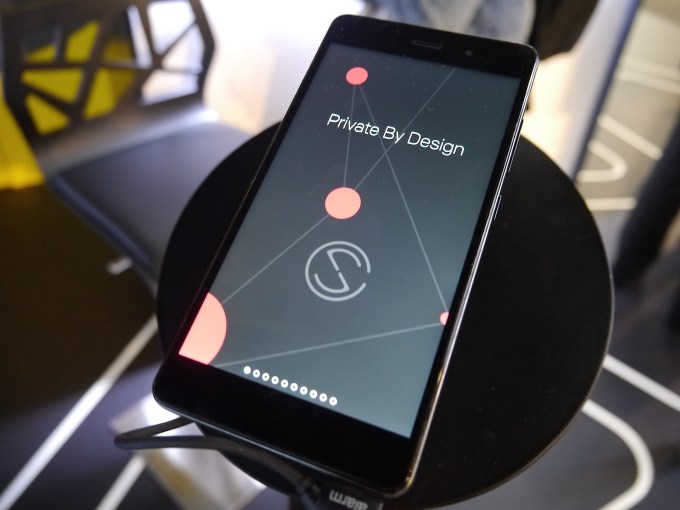
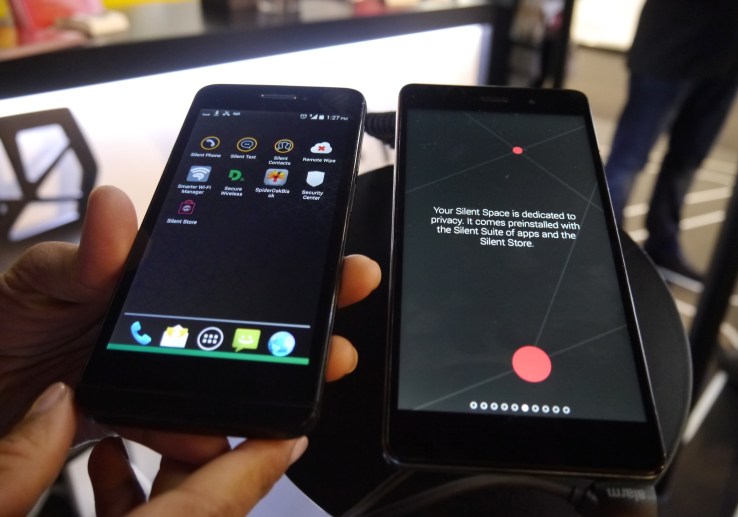
This year they were back with a sequel device, Blackphone 2, and a plan to release a tablet, under the moniker Blackphone+. Now wholly owned by Silent Circle, the Blackphone team was also touting a suite of enterprise-focused encrypted apps and services, flush with $50M in new financing.
Geeksphone co-founder Javier Agüera, who has now moved over to head up innovation for Blackphone, said SGP Technologies’ priority now is scaling up — by targeting the enterprise market.
“I wouldn’t define Blackphone as a social enterprise but there’s definitely a component there as towards making the world more secure and protecting people’s privacy. So it’s a big opportunity and we’re now focusing on making Blackphone grow,” he told TechCrunch. “Now in the second year we’re stepping up.
“We’re entering into the converged space with the tablet. We are re-exploring how enterprises use this kind of device. We don’t expect every single enterprise to take a Blackphone+ into a meeting room, so into vertical use, that’s why we make it available in different forms and flavors so we can adapt and cater to the different needs.”
While the original Blackphone was marketed at prosumers, and they remain a secondary target, Agüera said the big growth opportunity for Blackphone’s pro-privacy hardware and software is in the enterprise space, driven by the consumerization of enterprise IT and the BYOD (bring your own device) trend.
“The perimeter of security is no longer inside the building it’s outside. So that’s why we’re focused on enterprise,” he said.
Blackberry, the erstwhile encrypted email enterprise darling, did not even have a booth at this year’s MWC — although it did briefly tease a new device it has in the pipes for release later this year, showing that while its fortunes are undoubtedly down it’s not entirely out of the mobile game. And with security rising up the enterprise agenda Blackberry may feel it has reasons to be cheerful.
Still, it’s clear the years of Blackberry owning enterprise mobility are over. Which means more room for newcomers, like Blackphone, to elbow in with fresh solutions.
Blackphone2Security, privacy and geopolitics
“This is privacy. Security’s part of that. Privacy is security and policy,” said Agüera, talking generally about the scope of the Blackphone project. “It’s not only how secure is your device, but also what do you do with your device? And we help users and companies figure out how to protect their personal data in a real-world scenario. So we know people will install Angry Birds in the phone, we just help companies create the policies so that Angry Birds is totally isolated from their [work content].”
Another relative newcomer to the smartphone space, Finnish mobile startup Jolla, also had some security news on the slate at MWC, announcing a partnership with SSH Communications — to create a security hardened version of its Sailfish mobile OS. That’s likely not arriving til next year but the trajectory is tellingly similar, with Jolla also pointing to businesses and governments as potential customers of hardware running Sailfish Secure.
“All of the devices at a certain point will have a security client,” Jolla co-founder Marc Dillon told TechCrunch in an interview, explaining how Sailfish’s security credentials are going to be burnished. “So they can have secure communications peer to peer, device to device. Then in conjunction with SSH we can also offer solutions to enterprises so that if banks, hospitals, things that require high levels of security and want to be able to freely communicate peer to peer they can.”
Jolla has also now got a tablet in the works, and since launching its first device at the end of 2013 has made a point of emphasizing how its business model does not involve selling user data to third parties — making privacy protection a highlighted point of differentiation between Sailfish and Google’s Android. So it’s also now pushing privacy plus security.
Jolla tablet
“We’ve had a lot of interest from governments,” Dillon added. “We’ve been talking to the European Union. We’ve been talking to the Russian government… They’ve come to us. They’ve been talking about this in the news.”
Jolla’s European origins explains the regional interest from Russia. This is post-Snowden geopolitics being played out via non-U.S. mobile platform preferences, giving regional players some potential business uplift.
Blackphone, meanwhile, has ties to the U.S., with offices and investors there, but has chosen to be headquartered in Europe, in Switzerland, a country which enshrines a right to private communications and email in its constitution. And it’s forked Google’s Android — creating a security-hardened version of the platform, called PrivatOS, that’s loaded onto its own brand hardware (assembled and security signed in Madrid, Spain), with Google services replaced with its own suite of secure apps.
Its business is also software as a service as well as hardware — extending Silent Circle’s original portfolio with a suite of encrypted communications apps and services that run on other devices, including iOS and Android. The company is positioning its business to reach broadly across the mobile space to serve enterprise customers of all stripes.
Agüera says Blackphone already has government agencies using its services — including in the U.S. “We sell worldwide, in all regions of the world. Latin America, Middle East, South East Asia, South Korea, everywhere,” he added. “We have companies from Fortune 50, Fortune 1000. Some corporations use us across the company, some for just the top executives. Even some corporations, they don’t use us but they have us as a back-up solution — because for example when Sony was broken into, how do you manage that crisis?
“In Sony they had to take the old Blackberrys, like they had in the warehouse, five-year-old Blackberrys… We’d rather our customers use us as a daily phone, but that’s part of it. Each corporation has different needs, and we have to cater to those needs.”
Elsewhere on the MWC show floor a Brazilian startup called Sikur was showing off a Blackphone-a-like privacy-focused handset called GranitePhone — touting encrypted text messaging, voice, group chat and email, along with Android and iOS versions of its software — so buyers of its devices aren’t locked into talking to a limited circle of just GranitePhone users.
The Brazilian government has been highly and publicly critical of U.S. intelligence agency surveillance programs, so it’s no surprise that a homegrown startup has followed Blackphone’s lead and is pitching counter-surveillance technologies of its own.
Trust and transparency
Open source company Mozilla, which makes the HTML5-based Firefox mobile OS, was also talking privacy in Barcelona this week — promoting an ongoing collaboration with German carrier Deutsche Telekom, which it announced at MWC last year.
Media reports initially got the wrong end of the stick, thinking the pair were about to unbox a dedicated privacy phone. That was not in fact the case. Instead they discussed an ongoing collaboration that’s aiming to bake privacy thinking into Mozilla’s Firefox OS — in order to “bring data privacy closer to customers”, as they put it when they announced the initiative last year.
While not as instantly tangible a concept as a ‘privacy phone’, it’s further evidence of privacy concerns filtering down into business practices — and being used as “a point of differentiation” to attract customers, as Denelle Dixon-Thayer, Mozilla’s SVP of business and legal affairs, couched it during an on stage panel.
The session also included Dr Claus Ulmer, group privacy officer for Deutsche Telekom.
MWC15 privacy panel session
The pair said the business imperative to come up with privacy solutions boils down to building user trust — and that brand trust has been converting into improved revenues for Deutsche Telekom, said Ulmer.
“We always try to put the user first,” added Dixon-Thayer. “Users are fearful about what’s happening to their data. Who has access to their data. What’s happening if the entity gets access to the data…  We need to have those users trust the ecosystem. If we get them to trust the ecosystem we’re going to generate more interest, more support from them, and we’re going to get more out of it… If users understand the value exchange.. they’re more likely to feel comfortable sharing their data.”
One area she said Mozilla has been working on is making its privacy policies more accessible and intelligible for mobile users — by, for instance, writing them using a ninth grade reading model and using bullet points to condense and foreground key points, to offer a digested and accessible summary ahead of the full T&Cs. They also actively size policies to fit on small mobile screens.
Dixon-Thayer said a lot more needs to be done generally in the digital space to get technology users reading and understanding the implications of what they are agreeing to. She called for more creative approaches to engage users by making privacy policies “simple and interesting enough” — perhaps using contextual alerts, or pictures to help convey the implications of data sharing in a more immediately graspable way.
“The next step requires more user engagement,” she argued. “In Firefox OS… we’ve really tried to do something differently. We have created space for privacy policies for all of these different parties in the transactions, and some folks have wanted to include theirs in our OS.
Firefox
“Part of it is that I think the challenge is we need to do it more contextually — so it’s in context for the user, so the user doesn’t just agree to something at the outset and then not really understand what that means later. Because that’s part of the problem of not engaging them in that value exchange… We need to be creative about how we do it. I think alerts by the phone is one way we can do it.”
Deutsche Telekom’s Ulmer said the aim of the privacy collaboration with Mozilla is to help users understand “what’s going on with their device”, and also give them more control, so they can influence how or what kind of data is flowing — perhaps via offering varying degrees of data obfuscation.
He gave the example of a location blur feature which lets users choose how specifically (or otherwise) they want their location to be transmitted.
“For what reason does a weather app need to know exactly where you are at this moment?” he asked. “This solution will offer you the ability to blue your location to a radius of 10km or to a country or have a random solution for that. These are quite intelligent solutions that really help all of us to have a better future in the mobile world. And they also help the companies to sell their products because as long as we have the trust of the customer we’ll also succeed in the business.”
The two both made the point that more collaboration is needed among players in the digital industry generally to pro-actively work on baking privacy by design  into their business processes — to avoid the risk of having regulators step in and do it for them.
“All the participants in it need to be comfortable about being transparent, and today not everybody is — because they’re concerned that if they’re transparent what if their competitor’s not and then they look like they’re doing something bad when in fact it’s the industry really doing it,” Dixon-Thayer noted. “So we need to be better as a group and collectively say this is where we want to go, how can we get ourselves there?”
“It’s only going to get worse for all of us to operate in this space if we don’t actually take on some self-regulation and do it ourselves,” she added.

IoT as a privacy opportunity
Intel’s Brian Hernacki, chief architect of its New Devices Group, which includes wearables, was also speaking during the session — and he looked past mobile to consider privacy in an age of myriad connected devices, which he argued amps up the risks in multiple ways and therefore requires a new approach.
“You’ve got people who make coffee pots and belt buckles and shoes.  They don’t live and breathe technology, they don’t live and breathe privacy law. They don’t necessarily even have a legal department to help them digest the privacy law that’s out there. The space itself is also much more prone to sensing, collecting data,” he argued, adding: “It almost inherently creates more risk.
“We want the value that comes out of these great devices that collect our information and make recommendations to us… And the devices themselves are more challenging; they need to share. They have very tiny little processor, very tiny little memory, very tiny little battery, they need to ask that smartphone or that cloud service to help them accomplish the task that you want them to do.”
At the most basic level, wearables’ tiny screens clearly aren’t suited to displaying or otherwise delivering lengthy privacy policies. Some connected devices don’t or won’t even have screens. So how will IoT device makers even be able to meaningfully gain user consent for data processing?
There were no clear answers during the session on how to fix that specific issue, but Hernacki argued there is a business opportunity at this “nascent point” in the development of IoT to advocate for privacy by design, and for others to come along and sell “pre-designed”, “pre-integrated” pro-privacy technologies and platforms to the smaller entities who are building connected devices.
In other words IoT startups could be sold privacy services and expertise — such as technologies that automatically encrypt or safely transmit data, to relieve every OEM in the space from having to “go build a TLS stack” themselves, which Hernacki asserted is “never going to happen”.
“We need to understand that IoT means thousands, or 10,000 OEMs, who are not necessarily deep technical players, who may not have deep legal partners, there has to be an aggregation capability. Someone has to provide pre-designed technologies, so that when somebody goes to build that bracelet or that smart shoe, or that wireless charging IKEA table, then every one of these companies doesn’t have to think through and then resolve these problems.”
smartwatches
“There are a lot of OEMs out there without deep resources to really invest individually in this. And the more best practices and core capabilities that we can bring in, pre-integrated platforms to those manufacturers, the better chance we have of covering the market with the kind of privacy-centric design that we want. We’re not going to be able to rely on 10,000 OEMs to all do it right,” he continued. “A lot of the traditional techniques, education, transparency, accountability, choice, are absolutely great beginnings, but they’re not enough. We’re going to need more than that.”
“Don’t get me wrong, this is still a very hard problem. There are still very challenging technical barriers. But we’re at the right moment in time to do it. We’re well educated to do it. And I think, when I talk to people in the industry, we’re all motivated to do this well,” he added.
“There’s a great opportunity. A lot of the companies here are looking at building these pre-packaged technologies… to enable this explosive growth. To enable the kind of capabilities that we want to see out of wearables and IoT.”

Monday, 23 February 2015

Main Street Hub Lands $20M To Bring Social Media Marketing To Small Business

Main Street Hub, a company that helps mom and pop businesses run social media marketing, customer relationship management (CRM) and marketing automation recently announced it has received $20M in debt financing from Silicon Valley Bank.
The company has raised a total of $40M. The most recent funding before this announcement was $14M in Series B in January, 2014. It has 6000 subscribers who are paying an average of $350 per month using a tiered pricing model, according to company officials.
Most small business owners are swamped just trying to keep their businesses running. They have little time to deal with modern online marketing or monitoring their Yelp page reviews. That’s where Main Street Hub comes in.
For a monthly fee, Matt Stuart, co-CEO at Main Street Hub says his company does all the heavy lifting across online channels for these businesses.

Saturday, 14 February 2015

With Treat’s Shutdown, Shutterfly Exits The Mobile Greeting Card Business

Shutterfly, the publishing company that operates a number of online and mobile brands associated with personal photo printing, is now shutting down Treat, its online and mobile greeting card service. The Treat application first launched back in April 2012, and later in the year arrived on mobile devices before getting an overhaul in 2013. The app allowed users to customize greeting cards on their phone, which they could then send to recipients via postal mail.
Treat competed with a number of other apps, including Red Stamp and Sincerely Ink, for example, and for a time, with Apple’s own Cards app, before that was discontinued. (Red Stamp and Sincerely also found exits in the months since, indicating, perhaps, there’s not enough demand for greeting card apps to build a sustainable business.)

Friday, 13 February 2015

Bringg Lets Any Business Offer Uber-Like Experiences To Their Customers

Uber has set the standard for mobile transportation apps, allowing customers to order, pay for and view their driver’s location right from their mobile device. Now, a new startup called Bringg wants to offer a similar level of visibility for any delivery-based service or those with drivers en route

Thursday, 12 February 2015

Walmart Expands Online Grocery Shopping Efforts After Strong Repeat Business

Walmart today expanded its online grocery-shopping service, which allows customers to shop online then pick up at their local stores, to a new market: Huntsville, Ala. The move comes only days after Walmart brought the same service to a handful of stores in the Phoenix area, as well. The retailer is still describing the curbside pickup option as something it’s

LivingSocial Offloads Its Let’s Bonus Business To Spain’s Ofertix

Got a tip? Let us know.MenuSearchNewsChannelsStartupsMobileGadgetsEnterpriseSocialEuropeAsiaTrendingTinderNSAAndroidGoogleMicrosoftAppleTwitterFacebookAll TopicsAll GalleriesTCTVShowsTCTV NewsBuilt in BrooklynCrunchWeekFly Or DieGadgetsIncubatedInside JobsTC CribsAll ShowsAll VideosEventsTechSupport EventsDisruptCrunchiesMeetupsInternational City EventsHackathonHardware BattlefieldIncludeNews AboutGoogle I/O 2014CESSXSWWWDC 2014


© 2013 Tech Support. All rights resevered. Designed by Templateism

Back To Top